Connection Pooling
Enables efficient management of resources associated with database sessions
https://uda.openlinksw.com/images/udapformatst.png
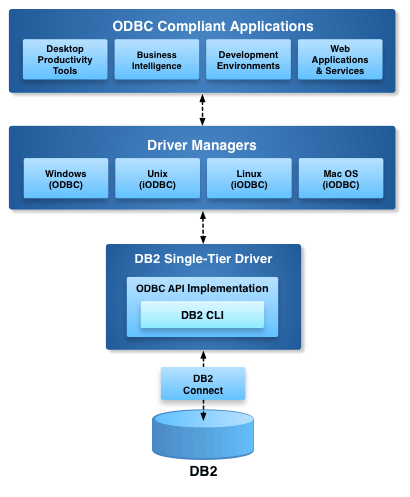
Single-Tier Architecture
https://uda.openlinksw.com/images/odbcdb2st.gif
Database mirroring compatibility
Provides developer with DBMS server topology flexibility
https://uda.openlinksw.com/images/udapformatst.png
Single-Tier Architecture
https://uda.openlinksw.com/images/odbcdb2st.gif
Deferred Fetching of Blob Data
The SQLGetData() and SQLPutData() ODBC API implementations have been significantly enhanced to provide intelligent handling of BLOB data. This facilitates transferring parameter data in parts over the network between the Enterprise Edition (Multi-Tier) Generic Client and Database Agents. Once transferred, the fragmented column data is reassembled in its entirety within the Client and/or Agent parts of the Enterprise Edition (Multi-Tier) driver (depending on if this is an insert or retrieval). This feature applies to data types such as SQL_LONGVARCHAR, SQL_WLONGVARCHAR, SQL_LONGVARBINARY, BLOB, and CLOB.
https://uda.openlinksw.com/images/udapformatst.png
Single-Tier Architecture
https://uda.openlinksw.com/images/odbcdb2st.gif
Multiple Active Result Sets (MARS)
Enables applications developers to work concurrently against multiple query result sets
https://uda.openlinksw.com/images/udapformatst.png
Single-Tier Architecture
https://uda.openlinksw.com/images/odbcdb2st.gif
Multithreading support
Enables development, deployment, and use of multithreaded client applications.
https://uda.openlinksw.com/images/udapformatst.png
Single-Tier Architecture
https://uda.openlinksw.com/images/odbcdb2st.gif
Reference Cursors Support in Stored Procedures
Support for advanced DBMS Server functionality.
https://uda.openlinksw.com/images/udapformatst.png
Single-Tier Architecture
https://uda.openlinksw.com/images/odbcdb2st.gif
SSL Support
Secure data transmission between applications and DBMS server
https://uda.openlinksw.com/images/udapformatst.png
Single-Tier Architecture
https://uda.openlinksw.com/images/odbcdb2st.gif
Snapshot transaction isolation level
Enabling additional transaction isolation granularity to application developers.
https://uda.openlinksw.com/images/udapformatst.png
Single-Tier Architecture
https://uda.openlinksw.com/images/odbcdb2st.gif
Support for Serial Data Type
Provides application developers with access to last serial values for a given table.
https://uda.openlinksw.com/images/udapformatst.png
Single-Tier Architecture
https://uda.openlinksw.com/images/odbcdb2st.gif
Transaction Isolation Levels configuration
User-level configuration of Transaction Isolation Levels. Transaction Isolation levels are optionally configurable as part of the DBMS connection configuration.
https://uda.openlinksw.com/images/udapformatst.png
Single-Tier Architecture
https://uda.openlinksw.com/images/odbcdb2st.gif
Transaction Isolation mode discovery
Enables developers to determine if DBMS instance is transactional or non-transactional.
https://uda.openlinksw.com/images/udapformatst.png
Single-Tier Architecture
https://uda.openlinksw.com/images/odbcdb2st.gif
XML and Native Large Value data types support
Provides developers with increased range of data types for developing new-generation applications.
https://uda.openlinksw.com/images/udapformatst.png
Single-Tier Architecture
https://uda.openlinksw.com/images/odbcdb2st.gif
Connection Pooling
Enables efficient management of resources associated with database sessions
https://uda.openlinksw.com/images/udapformatmt.png
Multi-Tier Architecture
https://uda.openlinksw.com/images/odbcdb2mt.gif
Database Independent Networking
Database Independent Networking that enables the use of a single generic data access driver for ODBC, JDBC, ADO.NET, and OLE DB
with a variety of backend database management systems (dbms).
https://uda.openlinksw.com/images/udapformatmt.png
Multi-Tier Architecture
https://uda.openlinksw.com/images/odbcdb2mt.gif
Database Independent Networking
Database Independent Networking that enables the use of a single generic data access driver for ODBC, JDBC, ADO.NET, and OLE DB
with a variety of backend database management systems (dbms).
https://uda.openlinksw.com/images/udapformatmt.png
Multi-Tier Architecture
https://uda.openlinksw.com/images/odbcdb2mt.gif
Database mirroring compatibility
Provides developer with DBMS server topology flexibility
https://uda.openlinksw.com/images/udapformatmt.png
Multi-Tier Architecture
https://uda.openlinksw.com/images/odbcdb2mt.gif
Deferred Fetching of Blob Data
The SQLGetData() and SQLPutData() ODBC API implementations have been significantly enhanced to provide intelligent handling of BLOB data. This facilitates transferring parameter data in parts over the network between the Enterprise Edition (Multi-Tier) Generic Client and Database Agents. Once transferred, the fragmented column data is reassembled in its entirety within the Client and/or Agent parts of the Enterprise Edition (Multi-Tier) driver (depending on if this is an insert or retrieval). This feature applies to data types such as SQL_LONGVARCHAR, SQL_WLONGVARCHAR, SQL_LONGVARBINARY, BLOB, and CLOB.
https://uda.openlinksw.com/images/udapformatmt.png
Multi-Tier Architecture
https://uda.openlinksw.com/images/odbcdb2mt.gif
Multiple Active Result Sets (MARS)
Enables applications developers to work concurrently against multiple query result sets
https://uda.openlinksw.com/images/udapformatmt.png
Multi-Tier Architecture
https://uda.openlinksw.com/images/odbcdb2mt.gif
Multithreading support
Enables development, deployment, and use of multithreaded client applications.
https://uda.openlinksw.com/images/udapformatmt.png
Multi-Tier Architecture
https://uda.openlinksw.com/images/odbcdb2mt.gif
Reference Cursors Support in Stored Procedures
Support for advanced DBMS Server functionality.
https://uda.openlinksw.com/images/udapformatmt.png
Multi-Tier Architecture
https://uda.openlinksw.com/images/odbcdb2mt.gif
SSL Support
Secure data transmission between applications and DBMS server
https://uda.openlinksw.com/images/udapformatmt.png
Multi-Tier Architecture
https://uda.openlinksw.com/images/odbcdb2mt.gif
Snapshot transaction isolation level
Enabling additional transaction isolation granularity to application developers.
https://uda.openlinksw.com/images/udapformatmt.png
Multi-Tier Architecture
https://uda.openlinksw.com/images/odbcdb2mt.gif
Support for Serial Data Type
Provides application developers with access to last serial values for a given table.
https://uda.openlinksw.com/images/udapformatmt.png
Multi-Tier Architecture
https://uda.openlinksw.com/images/odbcdb2mt.gif
Transaction Isolation Levels configuration
User-level configuration of Transaction Isolation Levels. Transaction Isolation levels are optionally configurable as part of the DBMS connection configuration.
https://uda.openlinksw.com/images/udapformatmt.png
Multi-Tier Architecture
https://uda.openlinksw.com/images/odbcdb2mt.gif
Transaction Isolation mode discovery
Enables developers to determine if DBMS instance is transactional or non-transactional.
https://uda.openlinksw.com/images/udapformatmt.png
Multi-Tier Architecture
https://uda.openlinksw.com/images/odbcdb2mt.gif
Session Rules Book
Attibute-based Access Controls that apply to all ODBC, JDBC, ADO.NET, OLE DB connnections
to a target database. Default attributes include username, machine name or network address,
client application operating system, and administrator configurable domain. This functionality
provides data access policies that enable control over read and write modes available to ODBC,
JDBC, ADO.NET, or OLD DB connections as applications and service usage evolves. For example,
transparently enabling read-only mode when an application is being used outside the office thereby
thwarting hacks that might occur over WiFi connections. Or implications of different users operating
the same application from a common device where each has different privileges.
https://uda.openlinksw.com/images/udapformatmt.png
Multi-Tier Architecture
https://uda.openlinksw.com/images/odbcdb2mt.gif
Session Rules Book
Attibute-based Access Controls that apply to all ODBC, JDBC, ADO.NET, OLE DB connnections
to a target database. Default attributes include username, machine name or network address,
client application operating system, and administrator configurable domain. This functionality
provides data access policies that enable control over read and write modes available to ODBC,
JDBC, ADO.NET, or OLD DB connections as applications and service usage evolves. For example,
transparently enabling read-only mode when an application is being used outside the office thereby
thwarting hacks that might occur over WiFi connections. Or implications of different users operating
the same application from a common device where each has different privileges.
https://uda.openlinksw.com/images/udapformatmt.png
Multi-Tier Architecture
https://uda.openlinksw.com/images/odbcdb2mt.gif
XML and Native Large Value data types support
Provides developers with increased range of data types for developing new-generation applications.
https://uda.openlinksw.com/images/udapformatmt.png
Multi-Tier Architecture
https://uda.openlinksw.com/images/odbcdb2mt.gif